What Zone 2 training actually is
Zone 2 is genuinely easy aerobic work, bounded by your aerobic threshold (AeT / LT1). It is the large aerobic block in a five-zone model: harder than recovery, easier than tempo, and only “easy” if you stay under that threshold.
It is not a colour your watch picked because of your birthday. Two athletes of the same age can have aerobic thresholds tens of beats apart. Zone 2 has to be measured from your own physiology or it is just a label.
Why easy days stop being easy
The aerobic threshold is the ceiling on genuinely easy work. Most athletes train above this without knowing it, which is why easy days stop being easy.
If the run you called recovery is actually tempo, you never get the aerobic work you think you booked. The harder sessions then have nothing to sit on, and the whole week drifts up. That drift is the usual reason people feel permanently “a bit tired” while their numbers go nowhere.
Zone 2 exists so the easy days stay easy, and so the days that are supposed to be hard can actually be hard.
Why an age formula cannot set Zone 2
A heart-rate zone calculated from your age is a guess about a stranger. Subtracting your age from 220, then taking a percentage, does not know where your lactate sits, how you clear it, or where easy work stops being easy for you.
Watches ship with those bands because they have to ship with something. They are not your zones. Loading someone else’s percentages into a chest strap and calling it Zone 2 training is how the easy days disappear.
The fix is not a better formula. It is a measurement. Zone 2 is the heart-rate, pace or power range that corresponds to your own aerobic threshold, read from your own samples.
Five zones, not four
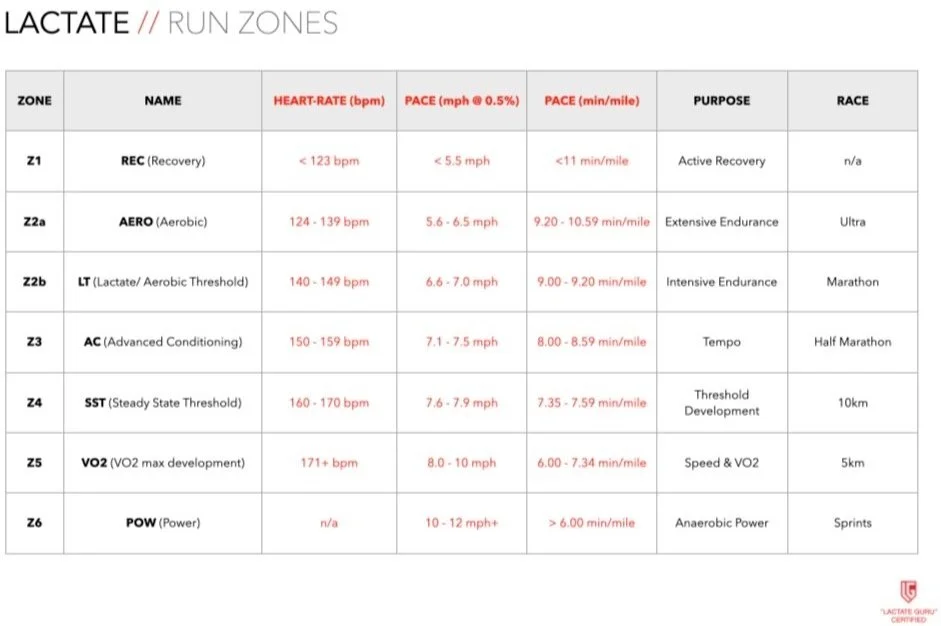
Training at the lab uses five zones, not a four-zone legend. The names and the relative sizes come from Gareth’s own model: Zone 2 is the wide aerobic block; Zone 4 is a narrow band.
- Z1 — Recovery
- Z2 — Aerobic
- Z3 — Tempo
- Z4 — Threshold
- Z5 — VO2 max
Where Zone 2 sits on a typical lactate curve
On a typical lactate curve, the top of Zone 2 is 2 mmol (AeT / LT1). Zone 4 is the narrow band just below and just above 4 mmol (SST / LT2). Those two marks are where training zones actually begin and end — not where a formula based on your age guesses they do.
Those millimole figures describe a typical staged response. They are not a visitor’s personal numbers, and they are not a target you should try to hit by staring at a handheld meter on the bike path. Your Zone 2 is the range Gareth reads off your own curve.
Steady-state threshold — SST / LT2 — is a different mark: the hardest intensity you can hold at a stable lactate, and the number that sets realistic race pace. Confusing that with Zone 2 is how “easy” becomes a threshold session.
How a lactate test finds your Zone 2
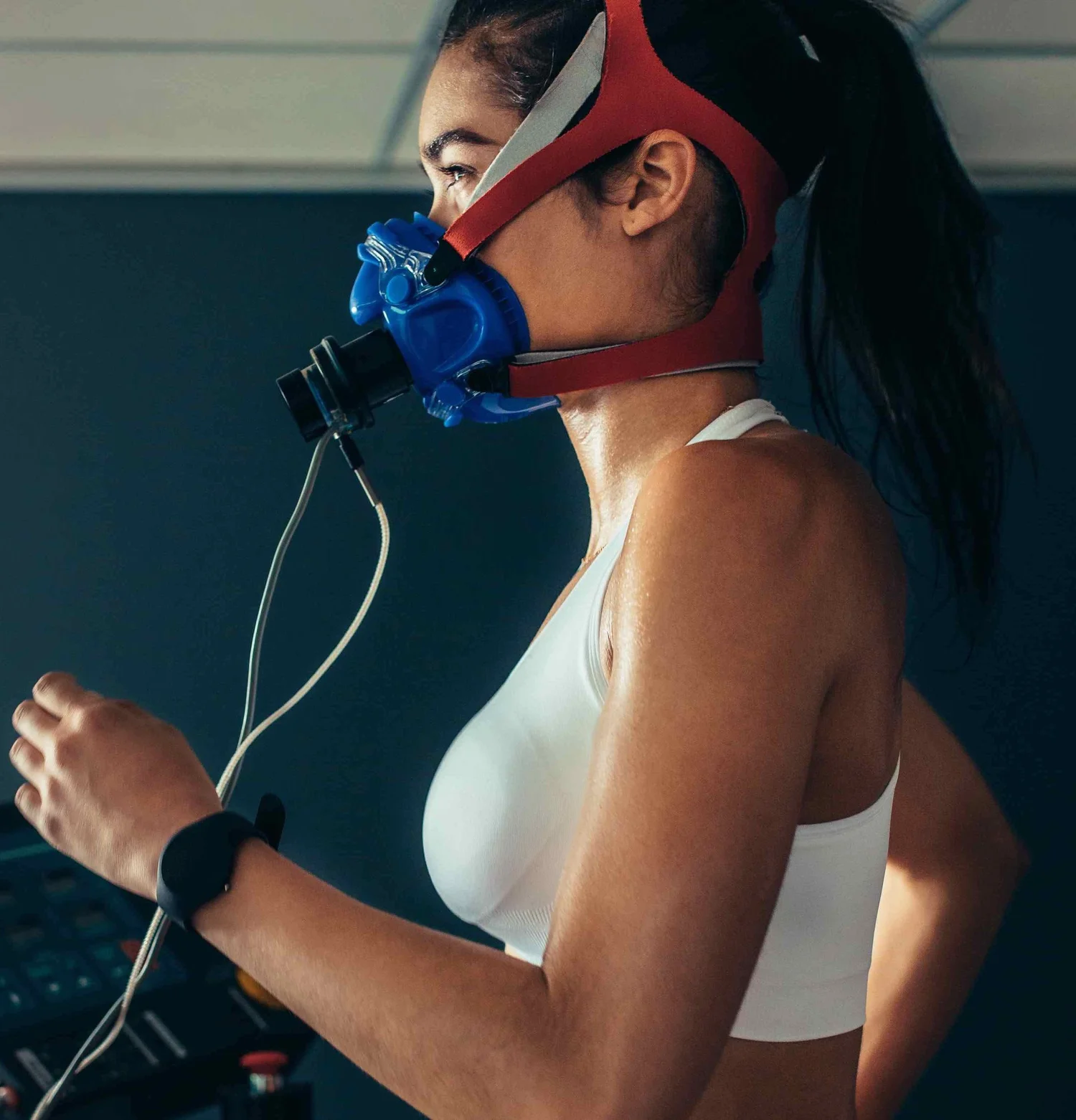
A blood lactate test measures how your body produces and clears lactate as intensity rises, which gives you your aerobic and threshold training zones. That is the test that sets Zone 2. It is $350 at the lab, and it is the Basic running and cycling package.
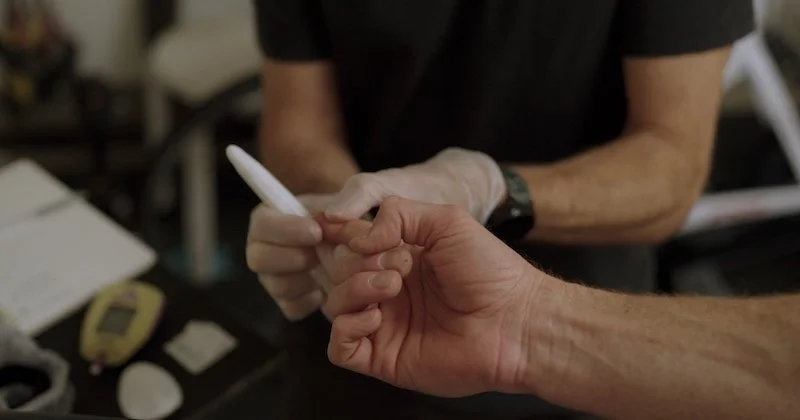
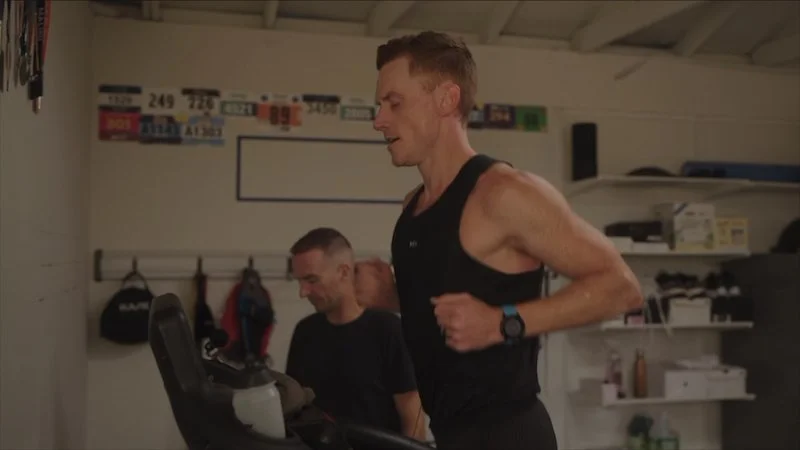
You test in your own discipline. The session steps up through 4 to 8 stages over 30 to 40 minutes. A small sample is taken after each stage; you keep moving. Gareth reads the curve with you in person rather than emailing a PDF.
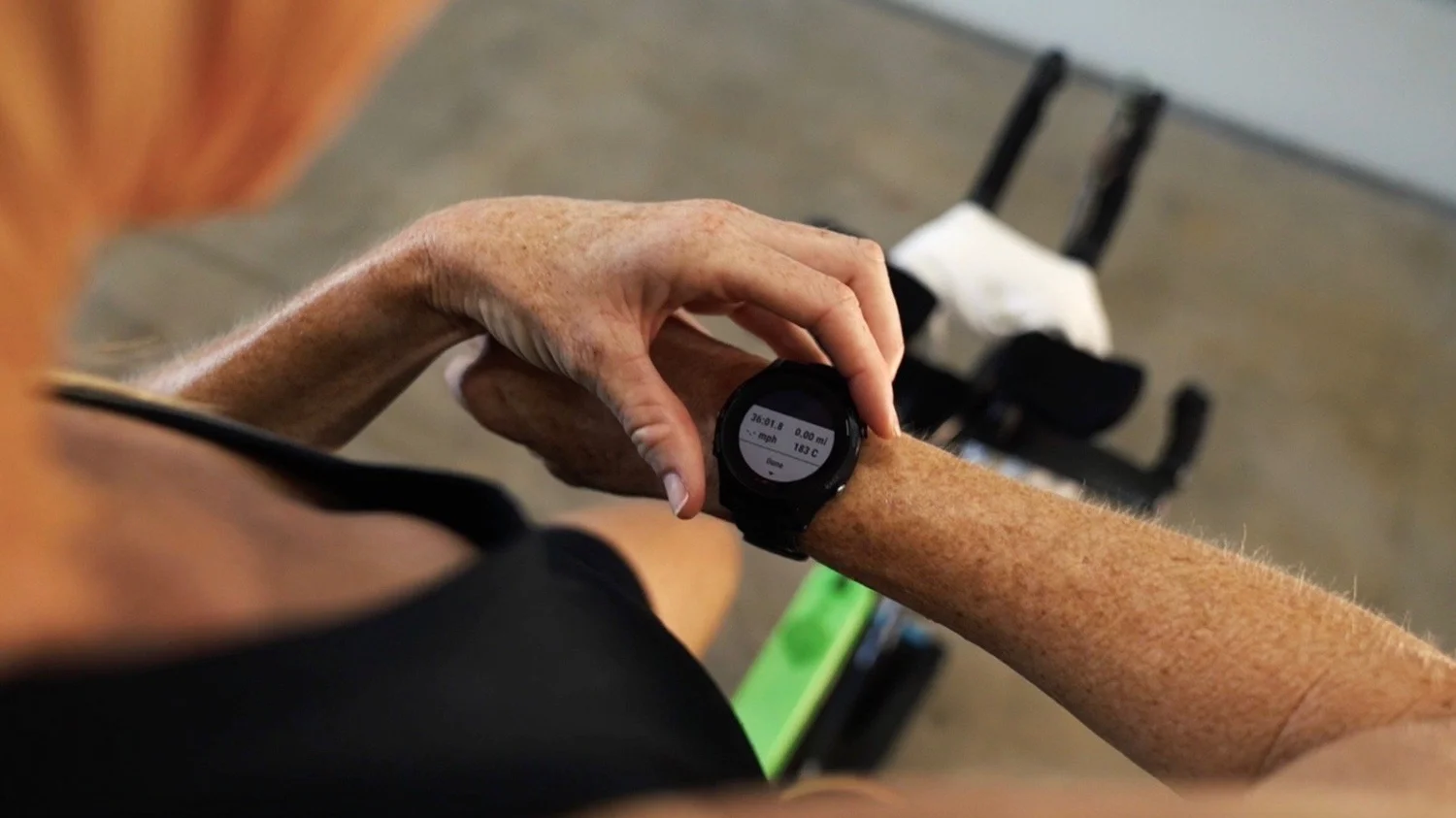
You leave with personal heart-rate training zones — and pace or power ranges — that you can load straight into a watch or head unit. The top of Zone 2 is on that list. So is the threshold band, so the hard work has a ceiling as well as a floor.
What to do with Zone 2 once you have it
Zone 2 is the work that builds the aerobic base the harder zones sit on. It is not the only training you do. Tempo, threshold and VO2 max work have their own bands. The point of measuring Zone 2 is so you stop spending the week in the three zones at once.
If you are being coached, every workout is uploaded to TrainingPeaks and can be pushed to your watch with the right band attached. You train with a chest-strap heart-rate monitor, not a wrist guess, and you keep a daily training journal so the file is not just a number.
Plenty of people who train this way are not racing. Training seriously without pinning on a number is a superb way to stay fit. The zones still have to be real, or “easy aerobic work” is just a mood.
Keep the top of Zone 2 current
Retest every 9 to 12 weeks. That is long enough for a training block to move the threshold and short enough that you are not still training to last season’s easy. As fitness changes, the top of Zone 2 moves. The watch does not notice unless you tell it.
If you want the zones rather than the slogan, book a blood lactate test. That is the measurement. The lab is at 1736 Ashland Avenue, Santa Monica, CA 90405. Call (858) 361-4733.