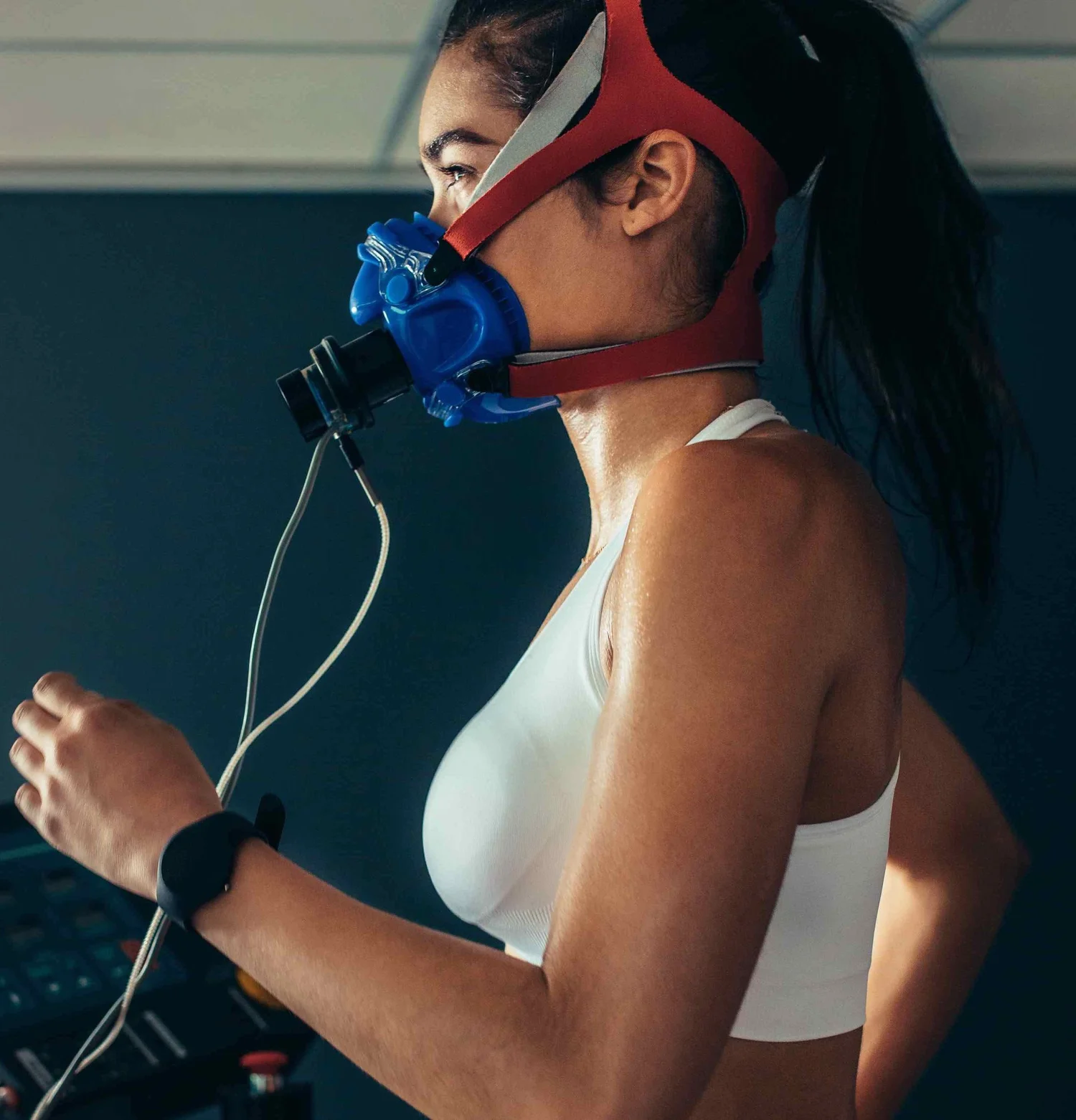
What VO2 max actually is
Technically, VO2 max is the maximum amount of oxygen you can consume and use during exercise, expressed as milliliters of oxygen consumed per kilogram of body weight per minute (ml/kg/min). That is the number a VO2 max test is built to find, not a score estimated from a watch or a calculator.
The highest readings sit in the 90s for men and about 80 for women. Those are the top of the sport. Most people who come through the lab are not chasing a figure that large. They want an honest reading of the engine they actually have, so they can train it.
If you want to be the fittest you can be, that is the full scoop: what the number is, why it matters for speed and for how long you stay well, and how we measure it in Santa Monica rather than guessing it.
The size of the engine
VO2 max and “Zone 2” are all the rage right now, with people like Peter Attia and Andrew Huberman podcasting about it and training buddies dropping it into every conversation. Underneath the noise the idea is simpler than the internet makes it sound.
Your VO2 is the size of your engine. Some people are born with a Ferrari and others a Ford Focus. You cannot change the size of the engine — that part is genetics — but you can tune whatever engine you have.
Using more oxygen at rapid rates makes you faster. Keeping VO2 high is associated with longevity. That is why, at ECLYPSE Fitness Lab, the VO2 max test sits under the goal “improve health + longevity”: cardiovascular fitness first, race day second.
Why bodyweight sits inside the number
A high VO2 max is built on other factors, first of which is bodyweight. Because the score is relative to kilograms, the same heart and the same lungs produce a higher reading on a lighter body. Diet and blood sugar are part of the equation, not a side note.
That is why a VO2 max test is often paired with an RMR test. RMR is what your body burns at rest, measured rather than estimated from a calculator that has never met you. It is the test under “drop fat + optimise body comp”: real calorie needs, macros, energy, a meal plan that matches the person in the chair.
The longevity packages at the lab follow that pairing. Longevity Basic is the VO2 max test on its own, at $275. Longevity Pro is VO2 max and RMR in one visit, at $450. Longevity Ultimate adds a blood lactate test as well, at $675. Every price includes the consultation.
What a VO2 max test measures
A VO2 max test measures the maximum amount of oxygen your body can use under load. You leave with your aerobic ceiling — VO2 peak, the top of your aerobic range, the marker most tied to long-term health — and your Fat-Max intensity, the effort at which you burn the most fat per minute.
Fat-Max drives fuelling strategy for long efforts. It is not a colour on a watch face. It is measured while you are actually working, on the movement you train.
Track it test over test. The point of an objective marker is that the next number either moved or it did not. Maximise the return on the training you are already doing by knowing whether the engine got larger, or only felt like it did.
VO2 max testing versus lactate testing
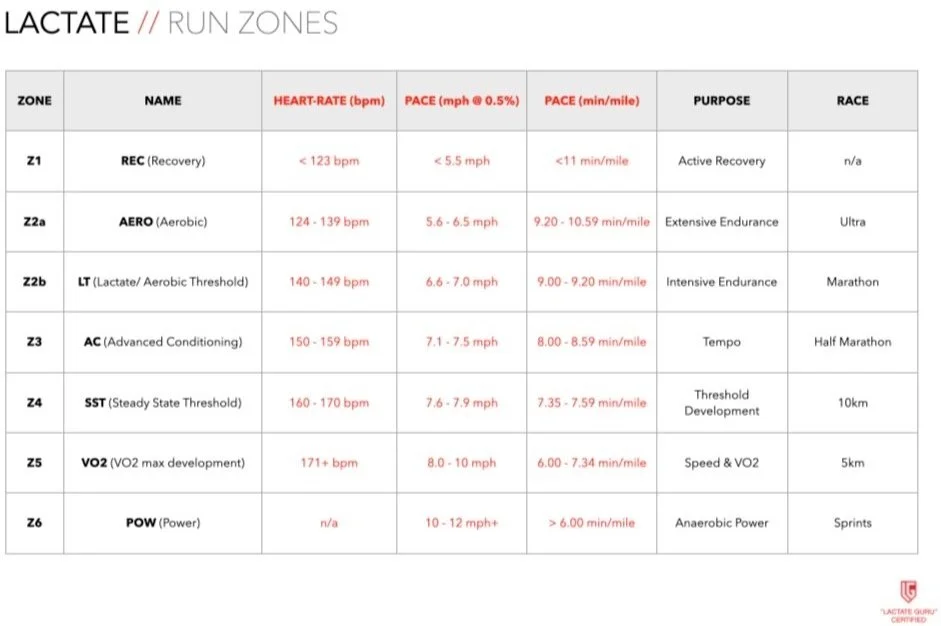
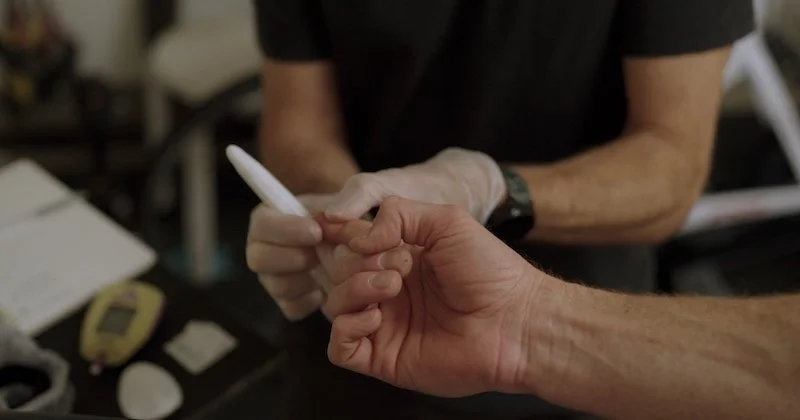
A blood lactate test measures how your body produces and clears lactate as intensity rises, which gives you your aerobic and threshold training zones. A VO2 max test measures the oxygen ceiling and Fat-Max. They answer different questions.
Lactate testing is the better choice if you are training for a race. VO2 max is the better choice if you want a single objective marker of cardiovascular fitness. Plenty of people book both in one visit: the running and cycling Pro packages are lactate plus VO2 max at $575, and Ultimate adds RMR at $675.
If the job is setting Zone 2 and threshold so easy days stay easy, that is the blood test. If the job is an honest cardiovascular number and a fuelling intensity, that is VO2 max. Gareth will tell you which is worth the money if you are not sure.
How a VO2 max test runs in Santa Monica
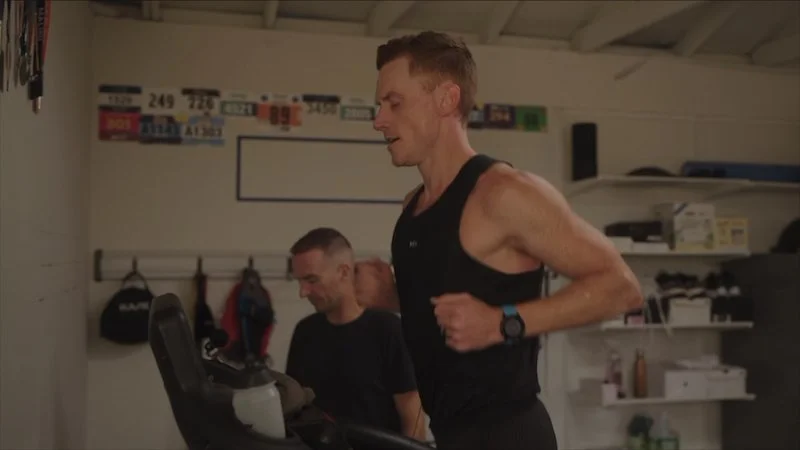
You test in your own discipline — treadmill for runners, ergometer for cyclists. The data is only useful if it comes from the movement you actually train. A test session takes 30 to 40 minutes of actual testing, progressing through 4 to 8 stages of increasing intensity. Allow around an hour in total, which includes the setup and the consultation.
You do not need to be a serious athlete to get tested. Roughly half the people tested at the lab are not racing anything. VO2 max and RMR are used just as often for body composition, longevity and general health as they are for performance, and the protocol is scaled to whatever you can currently do.
You do not get emailed a PDF and left to interpret it. Every test is run by Gareth Thomas and read back to you in person, in plain language, with what to change on Monday morning. The machine is not what you are paying for. Plenty of places in Los Angeles own one.
What you leave with
From a VO2 max test you leave with an objective cardiovascular number, your Fat-Max fuelling intensity, and a baseline you can compare when you come back. If lactate is part of the same visit, you also leave with personal heart-rate training zones, your aerobic and steady-state thresholds, custom workouts built from your own numbers, and a fuelling and hydration plan.
A VO2-only visit is not a substitute for a lactate curve. The oxygen ceiling is the top of the range. The thresholds that divide the range into training zones come from blood.
How often to retest, and what it costs
Retest every 9 to 12 weeks. That is long enough for a training block to produce real physiological change and short enough that the number does not go stale while you are still training to it.
A VO2 max test at ECLYPSE Fitness Lab is $275, including the consultation and a full explanation of your results. The lab is at 1736 Ashland Avenue, Santa Monica, CA 90405 — Tuesday to Friday 10–7, Saturday and Sunday 12–5, closed Monday. It serves athletes across Los Angeles, the Westside, Venice, Culver City and the South Bay.
Read how VO2 max testing works at the lab, then book a test, or call (858) 361-4733. There is no sales pitch. If the test is not the right one for you, Gareth will say so.