Before you book
How long a test takes, lactate versus VO2, prices, remote coaching, and the equipment you need.
Still not sure? Call (858) 361-4733. There's no sales pitch — if a test isn't worth it for you, he'll say so.
What is the difference between a lactate test and a VO2 max test?
A blood lactate test measures how your body produces and clears lactate as intensity rises, which gives you your aerobic and threshold training zones. A VO2 max test measures the maximum amount of oxygen your body can use during intense exercise, which gives you your aerobic ceiling and your Fat-Max fuelling intensity. Lactate testing is the better choice if you are training for a race; VO2 max is the better choice if you want a single objective marker of cardiovascular fitness.
How long does a test take?
A test session takes 30 to 40 minutes of actual testing, progressing through 4 to 8 stages. Allow around an hour in total, which includes the setup and the consultation where Gareth reads your results back to you.
Does the blood sampling hurt?
It is a small sample taken from a fingertip or earlobe with a fresh single-use needle after each stage, and it takes a few seconds. Most people describe it as a brief pinprick. You stay on the treadmill or bike throughout.
Do I need to be a serious athlete to get tested?
No. Roughly half the people tested at the lab are not racing anything. RMR and VO2 max testing are used just as often for body composition, longevity and general health as they are for performance, and the protocol is scaled to whatever you can currently do.
How often should I retest?
Every 9 to 12 weeks. That is long enough for a training block to produce real physiological change and short enough that your zones do not drift out of date while you are still training to them.
What do I actually leave with?
You leave with your personal heart-rate training zones, your aerobic and steady-state thresholds, your Fat-Max intensity, custom workouts built from your own numbers, and a fuelling and hydration plan. Every test is explained in person rather than emailed over as a report.
How much does testing cost in Santa Monica?
A blood lactate test is $350, a VO2 max test is $275, and an RMR test is $175. A combined VO2 max and RMR test in one visit is $450. Every price includes the consultation and a full explanation of your results.
Where is the lab?
The lab is at 1736 Ashland Avenue, Santa Monica, CA 90405, and serves athletes across Los Angeles, the Westside, Venice, Culver City and the South Bay. Call (858) 361-4733 to book.
How does coaching work day to day?
Every workout is uploaded to TrainingPeaks and can be pushed straight to your watch for in-workout guidance. Your data uploads back automatically after each session, along with sleep and health data from your wearable, and Gareth reviews it at the frequency your tier sets. You can leave notes on energy, stress or travel as you go. Contact happens by call, video, text and email, again depending on tier. Every athlete trains with a heart-rate monitor and keeps a daily training journal.
Do I need to live in Los Angeles, or even the USA, to be coached?
No. Gareth coaches athletes all over the world, many of whom travel constantly. Most come to the lab in Santa Monica for their initial testing, and where that is not possible he arranges testing with a provider local to you so the programme still starts from real data.
What equipment do I need?
The essentials are the basic kit for your sport plus a heart-rate monitor with a chest strap. Ideally you would also have a sleep tracker such as an OURA ring or WHOOP, a power meter if you ride, an indoor trainer, and access to a gym, a track or treadmill, and regular massage or chiropractic care. A budget for fuel and supplements matters too.
I am never going to win anything, but I want to be my best. Can I still apply?
Yes. Gareth works with driven people who want to reach their true potential, whatever level that starts from. Wanting to be excellent matters more than what you can currently do.
I hate racing but I want to train properly. Is that OK?
Yes. Training seriously without racing is a superb way to stay fit and in prime condition, and it is how Gareth lives himself. Plenty of the athletes he coaches never pin on a number.
My time is limited. Can I still get somewhere on an hour a day?
Yes. You will struggle with the longest races on that budget, and Gareth will tell you so honestly. But an hour a day, programmed properly around your actual life, goes a very long way — and building the plan around the time you genuinely have is the whole point.
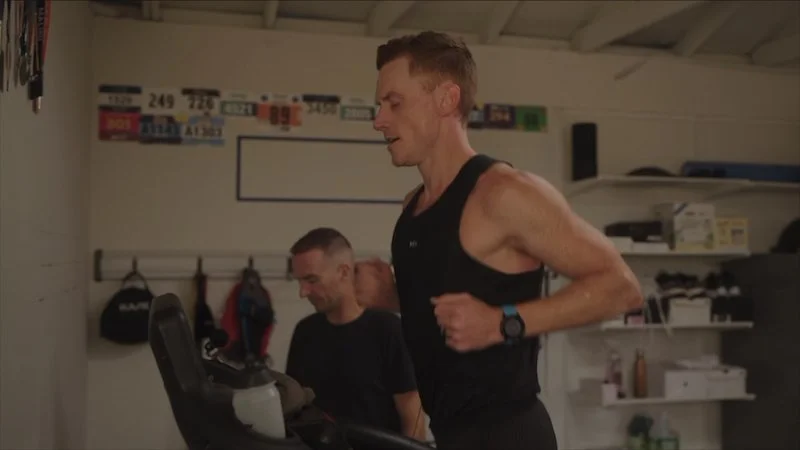
Stop guessing at your zones
One hour in the lab in Santa Monica, and you’ll know exactly how your body produces energy — and precisely how hard to go.