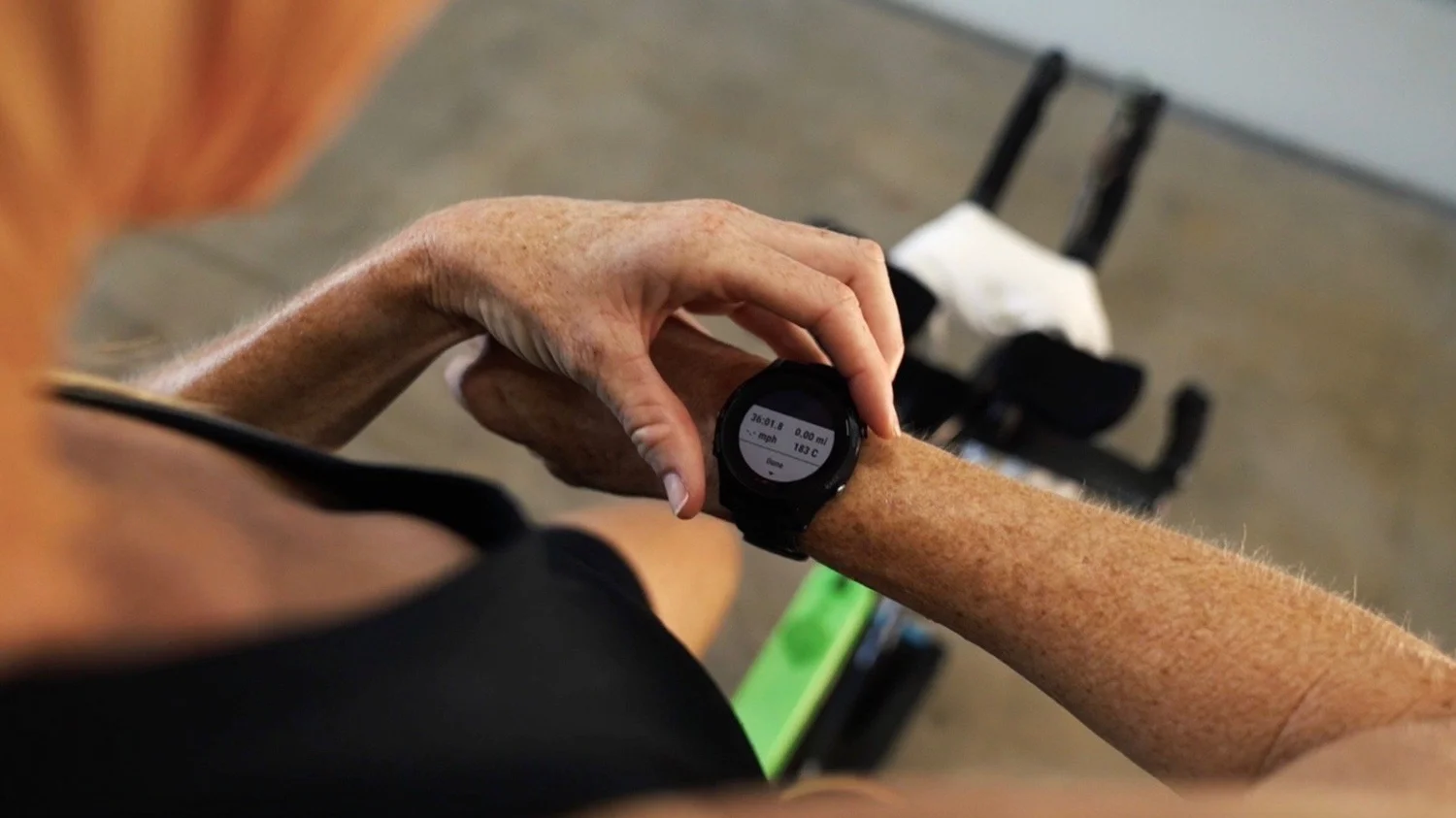
The monitor is only as good as the zones in it
A heart-rate monitor only works if the zones programmed into it are yours. The strap records beats. The zones tell you what those beats mean. If the bands came from an age formula, you are training to a guess about a stranger, with a very accurate clock.
Use it this way: get the zones measured, load them into the monitor and the watch, train with a chest strap, and send the file back after every session. Everything else — the watch face, the charts, the recovery score — is secondary to that loop.
A chest strap is the essential
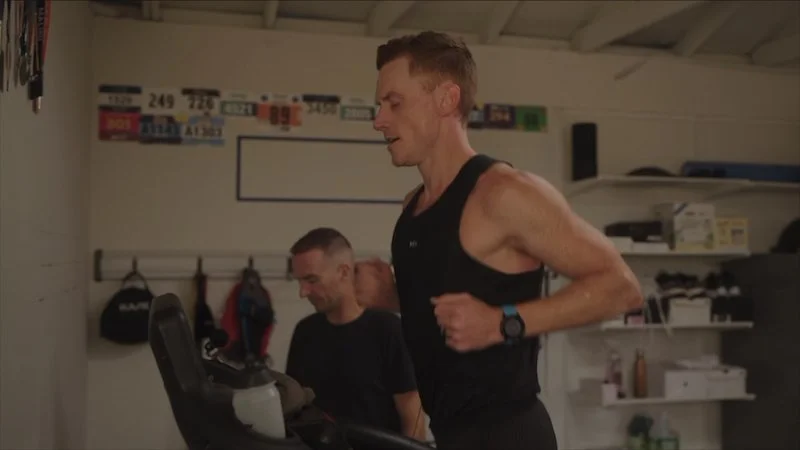
The essentials are the basic kit for your sport plus a heart-rate monitor with a chest strap. That is the piece every athlete Gareth coaches actually trains with. Wrist optical sensors are not what the programme is built on.
Every athlete also keeps a daily training journal. The monitor says what the heart did. The journal says whether you slept, travelled, or showed up already cooked. Notes on energy, stress or travel sit on the session so the file is readable.
Zones have to be yours
A heart-rate zone calculated from your age is a guess about a stranger. Subtracting your age from 220, then painting five colours onto the result, does not know your aerobic threshold, your steady-state threshold, or how you clear lactate.
Two people with the same age and a similar maximum heart rate can have Zone 2 in completely different places. Training to the default bands is how easy days stop being easy: the monitor is honest about the beats, and wrong about the work.
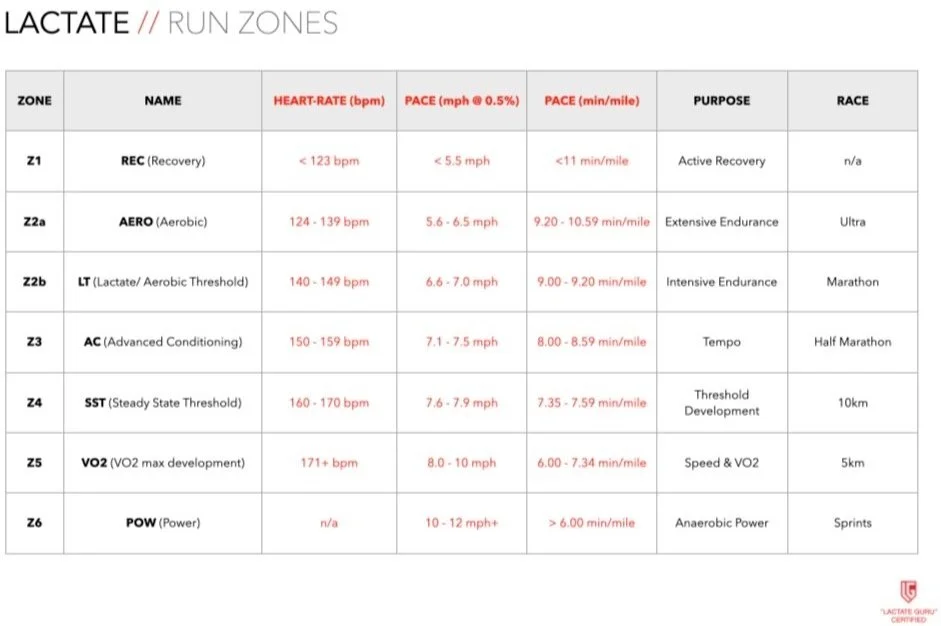
Your zones are Recovery, Aerobic, Tempo, Threshold and VO2 max — Z1 through Z5 — delivered as heart-rate and pace or power ranges. They come from blood, not from a menu.
What a lactate test puts in the monitor
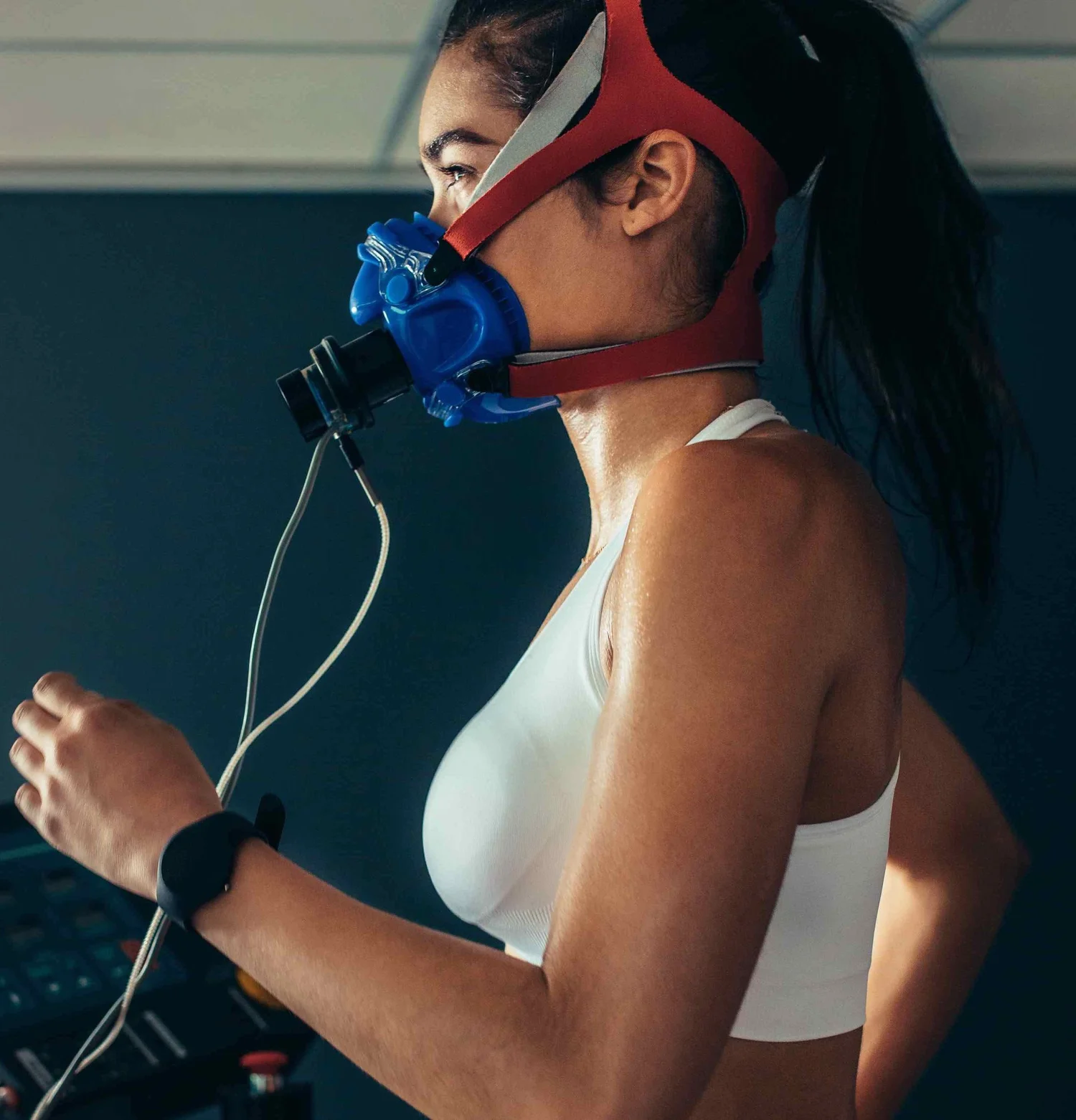
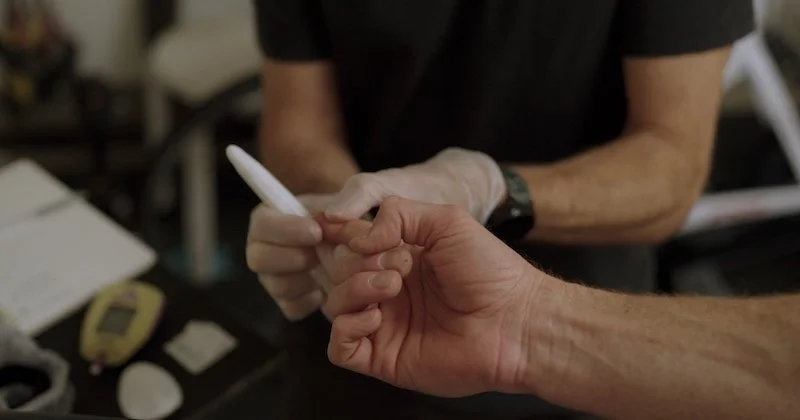
A blood lactate test measures how your body produces and clears lactate as intensity rises, which gives you your aerobic and threshold training zones. That is the appointment that fills the monitor with numbers that belong to you. It is $350 at the lab.
The top of Zone 2 is your aerobic threshold (AeT / LT1). The threshold band sits around your steady-state threshold (SST / LT2). On a typical curve those marks are near 2 mmol and 4 mmol; those figures are illustrative. Your numbers are the ones from your samples, read back to you in person.
Load the ranges straight into the watch or head unit. From then on, “easy” means staying in Zone 2 because that is where your lactate said easy is — not because the session felt conversational that morning.
Day to day, on TrainingPeaks
Every workout is uploaded to TrainingPeaks and can be pushed straight to your watch for in-workout guidance. Your data uploads back automatically after each session. Gareth reviews it at the frequency your coaching tier sets.
Gold is $300 a month, with bi-weekly data review, text and email, and a monthly call. Platinum is $600, with weekly review, phone support, and a bi-weekly call. VIP is $900, with twice-weekly review, a weekly call, a one-to-one workout session, and custom food and fuel planning. All three include a 360° custom program plus strength, mobility and core.
Contact happens by call, video, text and email, again depending on tier. The monitor is how the work is prescribed and how it is checked. Without it there is no file to review.
Wearables that help — and ones that do not set zones
A sleep tracker such as an OURA ring or WHOOP is useful. Sleep and health data from the wearable upload alongside the session, and that context belongs in the review. It does not set training zones, and it is not a substitute for a chest strap.
If you ride, a power meter sits next to the strap: pace or power ranges are delivered with the heart-rate bands, and an indoor trainer makes the prescribed work possible when the road does not. Access to a gym, a track or treadmill, regular massage or chiropractic care, and a budget for fuel and supplements all help. None of them replace measured zones in the monitor.
Testing first, then the programme
Most people come to the lab in Santa Monica for their initial testing so the programme starts from real data. You do not have to live in Los Angeles, or even in the USA, to be coached — Gareth coaches athletes all over the world, many of whom travel constantly. Where a trip to the lab is not possible, testing is arranged with a provider local to you.
The loop is the same either way: measure the zones, put them in the chest strap, train, send the file, adjust. An hour a day, programmed around the time you genuinely have, goes a very long way. Building the plan around that time is the whole point of coaching.
Keep the zones in the monitor current
Retest every 9 to 12 weeks. Fitness moves the thresholds. A strap still wearing last block’s Zone 2 will let you drift just like an age formula did, only with more confidence.
A blood lactate test is $350 at ECLYPSE Fitness Lab, 1736 Ashland Avenue, Santa Monica, CA 90405. Read lactate threshold testing for the protocol, then put the ranges in the monitor and train. Call (858) 361-4733.